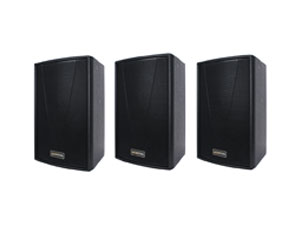
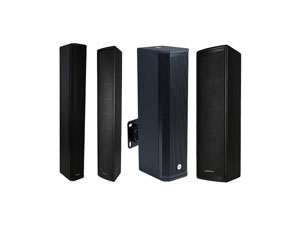
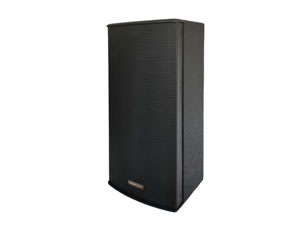
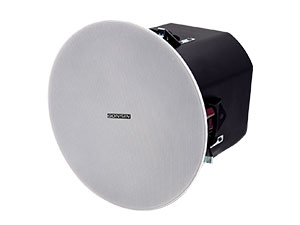
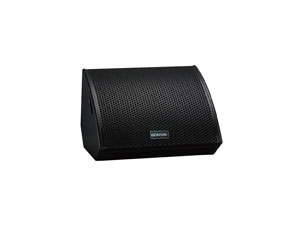
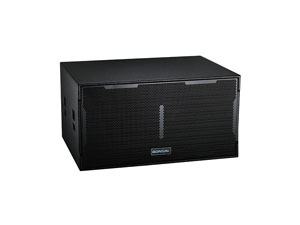
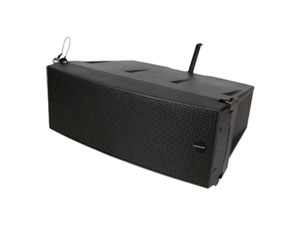
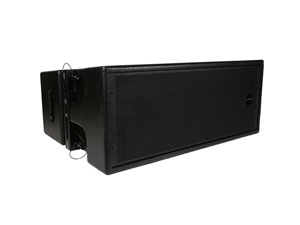
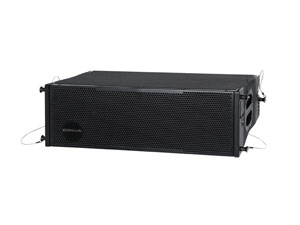
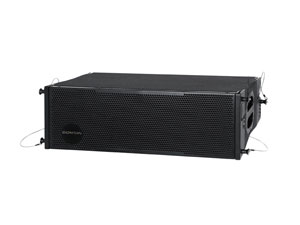
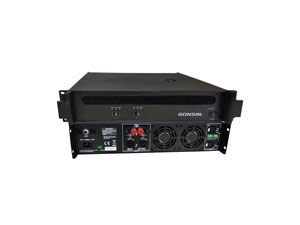
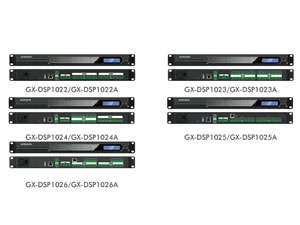
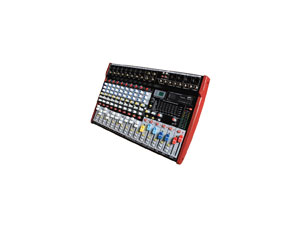
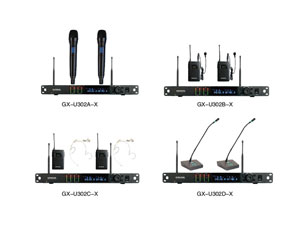
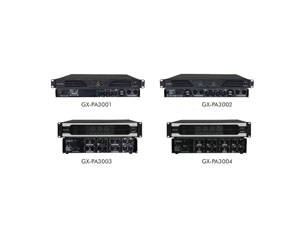
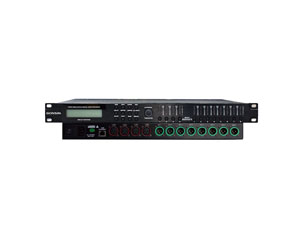
In luxury hospitality construction, structural conflicts between aesthetics and functionality often surface too late. Among these, the intersection of interior design and commercial audiovisual engineering is the most critical. Architects and developers frequently finalize ceiling plans—mapping out lighting, HVAC diffusers, and fire suppression sprinklers—before fully mapping out the electronic infrastructure.
When architectural layouts are locked in prematurely, integrating a premium hotel sound system later forces expensive structural re-engineering, compromised interior design, and acoustic dead zones. To ensure flawless execution, specific commercial AV benchmarks must be engineered directly into the architectural master plans from day one.
.jpg "/uploads/image/2026/06/18/hotel-av-installation-best-practices-what-to-specify-before-ceiling-plans-are-finalized(1).jpg")
Avoid Costly Rework: Key AV Decisions Architects and Developers Must Make Early
Waiting until the drywall is hung to select your audio hardware is a recipe for costly rework. Integrating commercial AV into early-stage schematic designs prevents structural clashes above the ceiling grid. HVAC ductwork, structural beams, and lighting pockets routinely compete for the exact physical space required by high-fidelity acoustic enclosures.
Developers must establish acoustic goals early. A high-ceilinged hotel lobby requires a vastly different backbox volume and suspension strategy than a low-profile boardroom. By determining the scope of the hotel speaker system during the structural phase, engineering teams can coordinate spatial paths. This foresight saves tens of thousands of dollars in rerouted utilities and patch-up construction work.
Ceiling Speaker Layout Best Practices for Consistent Coverage in Luxury Hotels
Achieving rich, immersive audio across expansive hospitality environments requires strict geometric planning. A common mistake is spacing ceiling speakers too far apart, creating a polarizing experience where guests pass through alternating pockets of deafening volume and total silence.
To maintain a luxury aesthetic and acoustic balance, planners must utilize an overlapping conical distribution strategy.
Edge-to-Edge vs. Minimum Overlap: For high-traffic luxury zones like hotel lobbies, bars, and corridors, an edge-to-edge pattern is the standard. For premium ballrooms and meeting spaces, a minimum overlap layout (where the edge of one speaker's acoustic cone meets the center of the next at ear level) is required.
Calculating Heights: Speaker spacing is directly proportional to ceiling height. In a standard 3-meter ceiling environment, wide-dispersion commercial speakers are typically spaced 4 to 5 meters apart to ensure absolute uniformity.
By ensuring these placement boundaries are integrated into early ceiling drawings, you guarantee that lighting fixtures do not displace critical speaker placements, preserving both interior aesthetics and acoustic continuity.
Power, Cabling, and Network Backbone Requirements for Modern Hotel AV Systems
Modern hospitality venues rely entirely on digital, networked infrastructure. The days of simply pulling analog speaker wire back to a local amplifier rack are gone. Today's premium commercial environments require robust, future-proof network backbones capable of distributing high-bandwidth digital audio over standard IT networks.
Planners must specify dedicated conduit paths and specialized low-voltage back-boxes before concrete pours and wall framing begin. High-performance hotel sound system deployments demand shielded Cat6 cabling run through independent, EMI-isolated conduits away from high-voltage electrical lines to prevent hum and signal corruption.
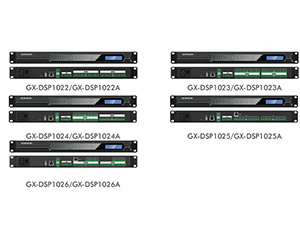
Furthermore, IT closets must be allocated adequate cooling and power budgets to support centralized network switches, digital signal processors (DSPs), and PoE+ power delivery models.
Designing for Flexibility: Multi-Zone Audio and Divisible Ballroom Planning
A hotel's financial success relies significantly on its ability to monetize its event spaces. Multi-function banquet halls and grand ballrooms must be highly adaptable. They need to seamlessly transform from a singular, 500-seat corporate convention hall into three independent, private breakout rooms within minutes.
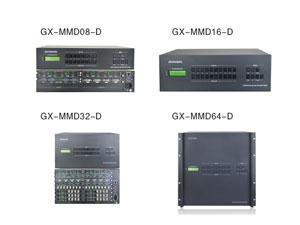
This operational flexibility requires an engineered multi-zone hotel speaker system configured alongside moveable air-wall partitions. When the physical walls are closed, the audio, wireless microphones, and control signals must automatically split into distinct, isolated zones to prevent sound bleed. When the partitions open, the system must instantly unify into a singular, time-aligned acoustic environment. Specifying multi-zone matrix routing processors and ceiling-mounted sensors early ensures the ceiling grid can physically accommodate these dynamic spatial reconfigurations.
Centralized Control and Integration: Specifying GONSIN-Ready Systems from Day One
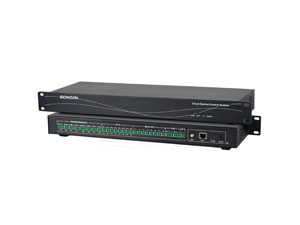
The true measure of a commercial audio installation is how easily hotel staff can operate it day-to-day. A state-of-the-art system is useless if non-technical banquet teams struggle to change audio sources or adjust room volumes. Specifying a centralized, interoperable hardware platform from an established manufacturer ensures consistent reliability across the entire property.GONSIN has delivered high-end digital conference and audio-visual solutions worldwide since 2003, serving diverse, high-profile properties across 140 countries. Our hardware ecosystem seamlessly integrates into your property’s primary IT and architectural control networks, offering streamlined management for venues of any size.
| Venue Area | Ideal Hardware Configuration | Core System Requirement |
|---|
| Lobbies & Restaurants | Background Public Address & Matrix Routing | Continuous, low-profile ambient audio |
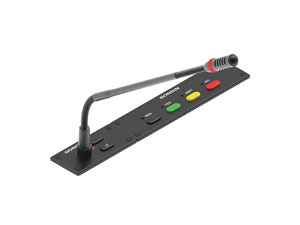
| Meeting Rooms | Conference Discussion System (Wired/Wireless) | High speech intelligibility & local volume control |
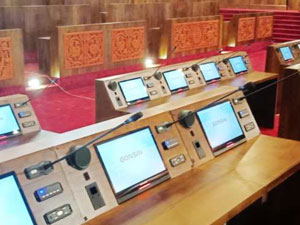
| Multi-Function Halls | Simultaneous Interpretation & Conference Public Address System | Multi-zone flexibility, high-power output, & ASR |
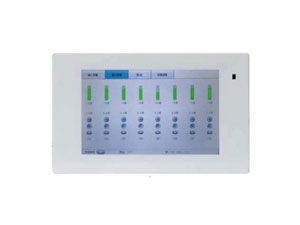
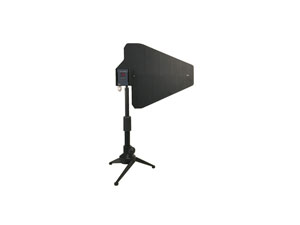
GONSIN systems provide intuitive user interfaces that aggregate multi-zone control, display automation, and wireless frequency management into single-screen controls. Furthermore, GONSIN’s proprietary FS-FHSS (Frequency Hopping Spread Spectrum) wireless technology avoids the radio frequency overcrowding common in hotel environments, ensuring secure, dropout-free performance without complex external wireless frequency coordination.
Conclusion
The difference between an average guest experience and an elite, luxury stay often comes down to invisible details like acoustic comfort and clear communication. By prioritizing AV design before ceiling plans are finalized, developers can prevent structural rework and secure perfect sound coverage. Integrating high-performance hotel sound system components and distributed hotel speaker system configurations into your initial architectural blueprints guarantees a flawless integration of form and function. Partnering with GONSIN ensures your property is equipped with an elegant, scalable, and highly reliable system built for the modern hospitality landscape.
Frequently Asked Questions (FAQ)
1. When is the ideal time to bring an AV consultant into a hotel project?
AV consultants should be engaged during the schematic design phase, well before finishing construction blueprints or finalizing ceiling grids. This allows for seamless spatial coordination with HVAC, lighting, and plumbing layouts.
2. How do divisible wall partitions affect hotel sound system zoning?
When a divisible wall is deployed, a microswitch inside the partition track alerts the central audio matrix. The system automatically splits the audio signals, routing independent local microphone and line inputs to their respective closed rooms without manual patching.
3. What type of cable infrastructure should be pulled for modern hotel speaker system networks?
We highly recommend pulling shielded Cat6 cabling for digital audio networking alongside traditional 2-core commercial speaker wire. This dual-path approach ensures full compatibility with modern digital protocols and standard analog amplification systems.
4. How does a professional hotel sound system handle ambient room noise?
Advanced installations utilize centralized Digital Signal Processors (DSPs) equipped with ambient noise sensing microphones. The system automatically and subtly scales background music up or down based on how crowded and loud the room becomes.



 اللغة العربية
  Español
  Français
  Pусский
  简体中文
简体中文 
.webp "FS-FHSS Wireless Simultaneous Interpretation System")
.webp "IR Simultaneous Interpretation System")
.webp "Interpreter Console")