In 2026, “paperless” is no longer the goal—it’s the baseline. The real revolution is happening in the intelligence layer: the systems that don’t just store documents, but actively remove friction from governance.
If your “digital meetings” still feel clunky, you’re not imagining it. Most organizations have simply traded paper chaos for digital overload—too many files, too many versions, manual minute-taking, and hardware that doesn’t talk to software. That’s why the next generation of paperless meeting management software is evolving into an AI-enabled meeting operating system that handles the “work about work.”
E-E-A-T note (real-world perspective): After observing the industry shift from analog AV to fully digital collaboration, it’s clear why companies like Gonsin—with deep roots in meeting hardware and AV engineering—are well positioned for this pivot: AI only works well when the meeting experience is engineered end-to-end, not stitched together.
The “Intelligence Pivot”: Why 2026 Meetings Need More Than Digital PDFs
Paperless systems used to mean: upload agenda → share files → annotate → vote → archive. Helpful, but still very human-dependent.
In 2026, decision-makers want something else:
Less admin time (minutes, action items, follow-ups)
More clarity (what matters, what changed, what needs a decision)
Higher governance trust (security, audit trails, compliance-ready records)
True hybrid meeting efficiency (equal experience for in-room and remote directors)
That’s exactly where AI meeting automation—especially Generative AI + Machine Learning—moves from “nice-to-have” to competitive necessity.
Beyond Document Sharing: 3 Ways AI Is Transforming the Boardroom
1) Automated “Minutes of Meeting” (MoM) That Feel Like a Board Secretary
The biggest leap isn’t transcription—it’s understanding.
Modern NLP can convert multi-speaker discussion into intelligent meeting minutes that include:
Clean summaries by agenda item
Decisions captured as formal resolution language
Action items with owners and deadlines
Follow-up prompts when something is “discussed” but not concluded
Information Gain insight: The best AI MoM systems don’t aim for 100% verbatim accuracy—they optimize for governance usefulness: “What was decided, by whom, and what happens next?” That’s why leading platforms combine audio signals, speaker identity, agenda context, and voting results into the final minutes—reducing administrative effort dramatically and tightening accountability.
2) Real-Time Sentiment & Engagement Analytics (Without Guesswork)
In high-stakes meetings, silence isn’t always agreement—and the loudest voice isn’t always the room.
AI can help chairs and secretaries spot:
When engagement drops (topic fatigue, confusion, side conversations)
When a topic needs clarification before voting
When consensus is likely reached—even if not explicitly stated
Used well, this doesn’t “replace leadership.” It supports better facilitation: pause when needed, summarize, confirm alignment, and move forward faster—a key lever for hybrid meeting efficiency.
3) Predictive Conflict Resolution (Before It Becomes a Governance Problem)
AI can learn your organization’s meeting patterns—without exposing sensitive content—to flag risks such as:
Agenda items that routinely run over time
Scheduling conflicts with required attendees or committees
Potential compliance issues (missing approvals, incomplete attachments, outdated policy references)
Items likely to trigger follow-up meetings (low decision readiness)
Information Gain insight: Predictive tools are most valuable when they’re boring. The goal isn’t flashy AI—it’s fewer “we’ll revisit next meeting” moments.
The Synergy of Hardware and Intelligence (The Gonsin Edge)
Here’s the truth most software-only vendors avoid: AI is only as good as the data it receives.
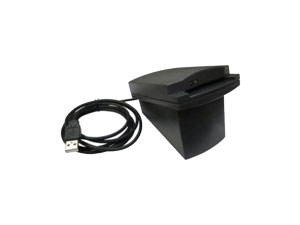
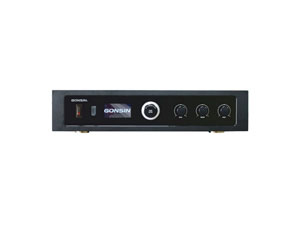
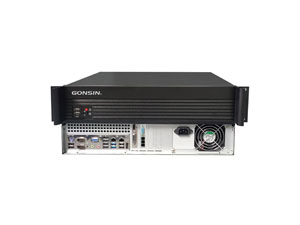
For paperless meetings to be truly “smart,” the ecosystem must integrate seamlessly with:
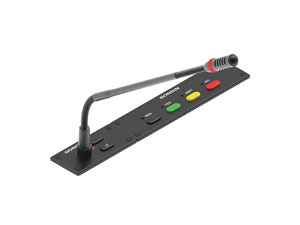
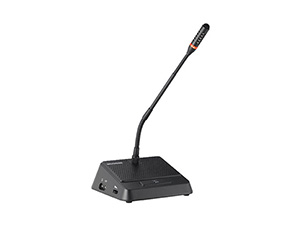
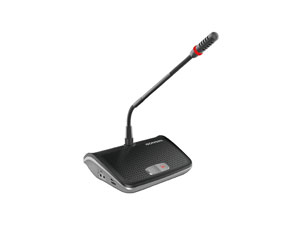
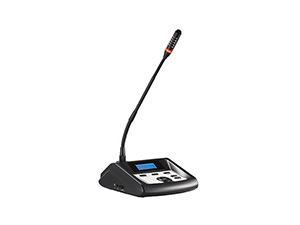
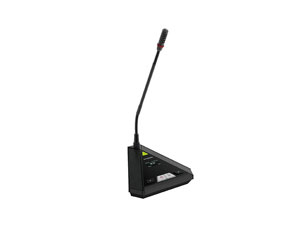
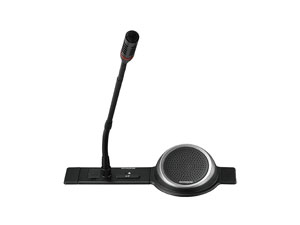
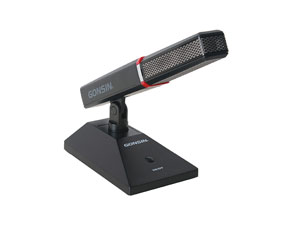
Microphones (clean speaker audio, speaker tracking)
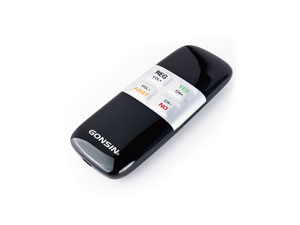
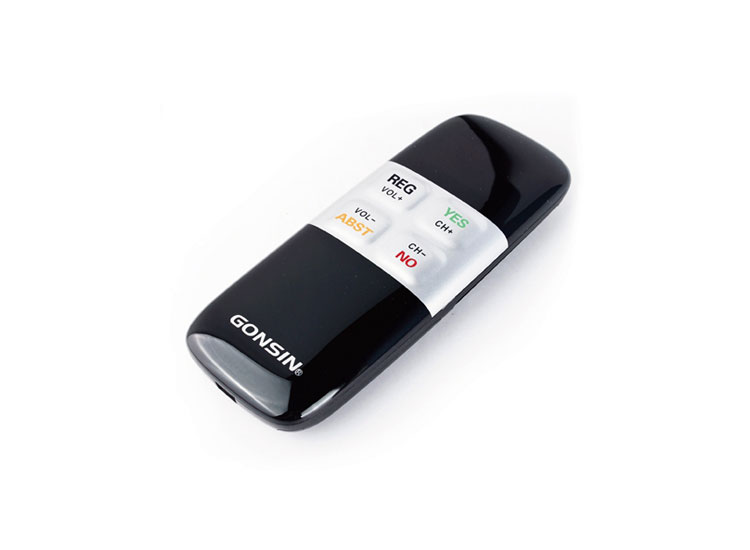
Voting/keypad or digital voting systems (verified decisions)
Nameplates and identity systems (who said what, who voted)
Room audio/visual infrastructure (hybrid parity, fewer dropouts)
This is where an integrated approach matters. With a unified hardware-software environment, AI can process high-fidelity inputs—because in AI, Garbage In, Garbage Out is not a slogan, it’s a failure mode.
If you want a practical view of that ecosystem approach, see how Gonsin is unlocking new levels of efficiency with paperless meeting software:
The “One-Touch” Governance Effect
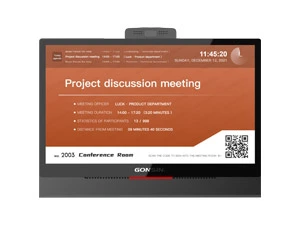
When hardware and software are designed to work together, the meeting experience shifts from “operators managing tools” to “directors making decisions.” One-touch meeting flows typically include:
Start meeting → agenda loads automatically
Speak → AI recognizes speaker + agenda context
Vote → results append instantly to the minutes and audit log
Close meeting → records securely archived with permissions applied
That’s not just convenience—it’s governance velocity.
Security in the Age of AI: Trust Is the New Currency
AI introduces a new “elephant in the boardroom”: privacy and confidentiality.
Modern digital boardroom security must answer not only “Is the data encrypted?” but also:
Where does AI processing happen?
Who can access outputs (summaries, transcripts, analytics)?
How are meeting records governed across retention policies?
Security Capabilities Decision-Makers Expect in 2026
End-to-end encryption for content in transit and at rest
On-premise AI options (especially for government, legal, regulated boards)
Granular permissions (board member vs. secretary vs. guest access)
Biometric access control for critical terminals or meeting rooms
Immutable audit trails for voting, edits, and approvals
Compliance: ESG + Modern Privacy Expectations
Boards also face rising expectations for ESG-compliant business tech—not just sustainability, but governance controls, access logs, and data discipline.
Information Gain insight: In 2026, “compliance-ready” doesn’t mean “we can export a report.” It means the system continuously enforces governance behavior—permissions, retention, version control, approval workflows—without relying on human memory.
Case Study: The “High-Stakes Boardroom” Scenario (2026 User Experience)
Picture a global company preparing for a quarterly board meeting—hybrid attendance, sensitive financials, and limited time.
Pre-Meeting: AI-Driven Agenda Builder
The secretary drafts agenda items and uploads board papers.
AI suggests missing attachments (policy references, last meeting decisions).
Directors receive a personalized view: “What changed since last time?” and “What requires a decision?”
During the Meeting: Clarity at the Speed of Conversation
Directors speak normally; the system captures speaker-attributed discussion.
Instant multi-language translation supports global participation.
When discussion drifts, AI prompts: “This item has no decision recorded yet—vote or defer?”
Digital voting runs cleanly; results are appended to the decision log in real time.
Post-Meeting: Minutes, Actions, and Records—Already Structured
Minutes are generated as a draft with agenda mapping.
Action items are auto-created and assigned for confirmation.
Voting outcomes and approvals are archived securely, with searchable metadata and audit history.
That’s paperless—but more importantly, it’s decision-centric.
Expert Insights
“In 2026, the challenge isn’t removing paper; it’s managing the massive influx of digital data. Our AI-driven software acts as a filter, ensuring directors only see what matters.” — Gonsin Product Lead
The 2026 Checklist for IT Managers (Information Gain Section)
Use this evaluation checklist to choose a future-proof platform:
AI & Automation
Hybrid Meeting Efficiency
Digital Boardroom Security
Governance & ESG-Ready Controls
Hardware & Ecosystem Fit (Often Overlooked)
Conclusion: Don’t Just Go Paperless—Go Intelligent
Paperless meeting management software is no longer a digital filing cabinet. In 2026, the winners are the platforms that act like an intelligent assistant for governance—reducing admin load, improving meeting outcomes, strengthening security, and accelerating decisions without sacrificing control.
If you’re evaluating next-gen solutions, don’t just ask whether they “support paperless.” Ask whether they remove friction from governance.
FAQ
How does AI improve paperless meeting security?
AI improves security when it’s paired with strong controls: encrypted processing, role-based access, audit trails, and on-premise/private deployment options for sensitive environments. The key is that AI outputs (minutes, summaries, action items) must inherit the same permissions and retention rules as source materials.
Can paperless meeting software integrate with existing AV hardware?
Yes—many platforms integrate with AV systems, but the quality of integration varies. For advanced AI features (speaker attribution, accurate minutes, hybrid parity), tight integration with microphones and voting systems can significantly improve data quality and reliability.
What are the ESG benefits of digital meeting management?
Digital meeting management supports ESG goals by reducing paper waste and printing logistics, while strengthening governance through auditability, controlled access, structured decision records, and policy-driven retention—helping boards demonstrate accountability and operational discipline.



 اللغة العربية
  Español
  Français
  Pусский
  简体中文
简体中文 

.webp "FS-FHSS Wireless Simultaneous Interpretation System")
.webp "IR Simultaneous Interpretation System")
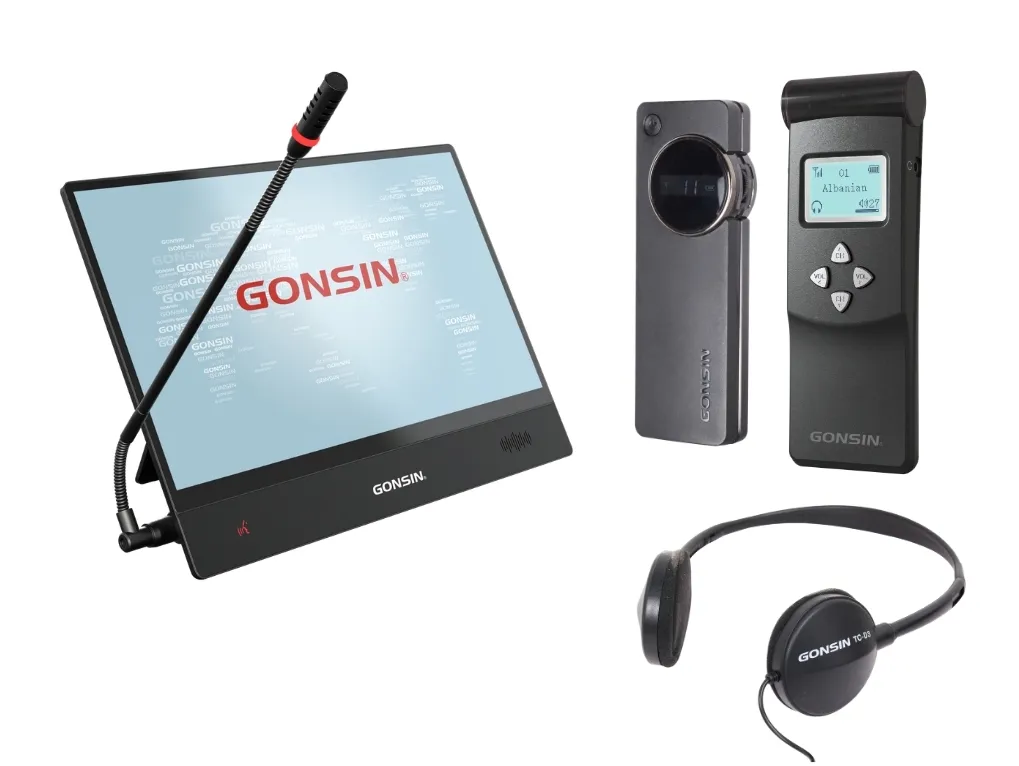
.webp "Interpreter Console")