 اللغة العربية
  Español
  Français
  Pусский
  简体中文
简体中文 
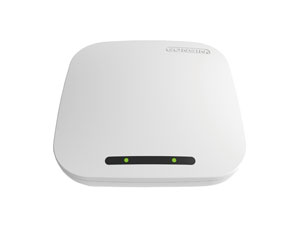
.webp "FS-FHSS Wireless Simultaneous Interpretation System")
.webp "IR Simultaneous Interpretation System")
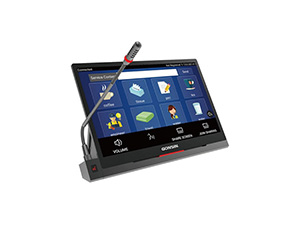
.webp "Interpreter Console")

A sound system can be loud enough for everyone in the room and still make speech difficult to understand. This is a common problem in conference halls, council chambers and other meeting spaces where listeners need to follow every word rather than simply hear that someone is speaking.
Speech intelligibility depends on how clearly the listener receives the speaker's voice before it is blurred by room reflections, background noise or uneven sound coverage. Raising the volume may help when the signal is simply too quiet, but it does little when the real problem is acoustic or comes from the way the system covers the room.
Improving PA public address systems therefore requires a wider view of the complete sound path: the voice must first be captured clearly, then distributed through a room that allows listeners to distinguish one word from the next. The following sections explain where clarity is commonly lost and what can be done about it.
Why Can Speech Still Sound Unclear Even When the PA System Is Loud Enough?
Loudness and intelligibility are not the same thing. If a listener can hear the speaker but has to concentrate to understand the words, simply adding more level may amplify the problem along with the voice.
One reason is that listeners do not hear only the direct sound from the loudspeaker. They also hear reflections arriving from the walls, ceiling and other surfaces. When these reflected sounds remain strong for too long, parts of one word overlap with the next. Speech loses definition even though the overall sound level appears sufficient.
Uneven coverage can create a similar result. The front of a room may be uncomfortably loud while people farther away receive less direct sound and proportionally more room reverberation. An operator may respond by increasing the master volume, which makes the front louder without addressing the underlying problem at the rear.
Background noise adds another layer. Ventilation, audience activity or equipment noise can mask quieter parts of speech. The more the system has to compete with the room, the harder it becomes to maintain natural, comfortable voice reproduction.
| What Listeners Notice | Likely Cause | Better Direction for Improvement |
|---|---|---|
| Speech is loud but blurred | Too much reflected sound | Address the room acoustics before adding more level |
| Front seats are loud but rear seats are unclear | Uneven loudspeaker coverage | Reconsider coverage and loudspeaker placement |
| Quiet speakers are difficult to follow | Poor voice pickup or excessive background noise | Improve the microphone-to-speaker relationship |
| Increasing microphone level causes feedback | Insufficient gain before feedback | Review microphone and loudspeaker positions before adding gain |
The first step in improving intelligibility is therefore to identify what listeners are actually experiencing. A system should not be tuned around the assumption that every clarity problem is a volume problem.
How Do Room Acoustics Affect Speech Intelligibility?
Every meeting room changes the sound produced by the PA system. Some reflections are natural and harmless, but a highly reverberant space can make spoken language increasingly difficult to follow as the distance from the loudspeaker grows.
This is especially noticeable in rooms dominated by hard surfaces. The direct voice reaches the listener first, followed by reflections from different directions. If those reflections remain too prominent, consonants become less distinct and consecutive words begin to run together.
Acoustic treatment helps by controlling the reflections that interfere most with speech. The aim is not to remove all reverberation or make the room acoustically dead. A conference venue should still sound natural. What matters is preventing reflected energy from competing too strongly with the direct voice.
Room shape also affects the result. A long hall, a high ceiling or a seating area extending well beyond the main loudspeakers can change the balance between direct and reflected sound. This is why two rooms using similar audio equipment may perform very differently.
Acoustic conditions should ideally be considered before the sound system is finalized. When room treatment and PA design are developed separately, the installer may later be asked to solve an architectural problem through electronic adjustment alone. DSP can refine the signal, but it cannot make a strongly reflective room behave as though those reflections do not exist.
Why Does Speaker Coverage Matter More Than Simply Increasing Volume?
A good conference PA design tries to deliver useful direct sound to the entire listening area. The goal is not to make every loudspeaker louder, but to reduce the difference between seats that receive strong coverage and seats that do not.
Consider a long conference hall with loudspeakers only at the front. People near the stage receive a strong direct signal. Farther back, that signal weakens while the contribution from the room becomes more noticeable. Increasing the front loudspeakers may improve level at the rear, but it can make the front rows unnecessarily loud.
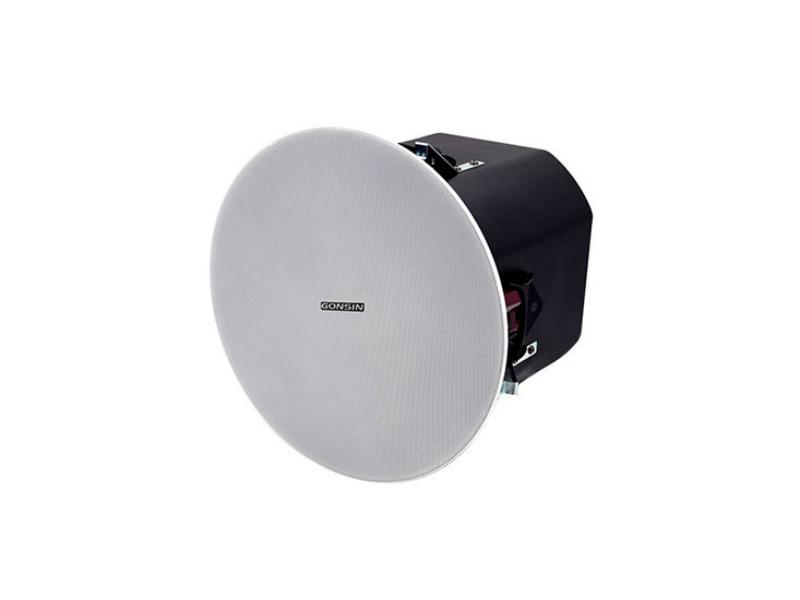
A more suitable design may extend coverage closer to the listeners instead. Depending on the room, this can involve repositioning the main loudspeakers or supporting distant seating with additional coverage. Where loudspeakers operate at different distances from the audience, timing also needs to be coordinated so that listeners do not perceive competing arrivals of the same voice.
The correct loudspeaker approach therefore depends on the geometry of the space rather than on one universally preferred speaker type. A compact meeting room and a large auditorium do not need to solve the same coverage problem.
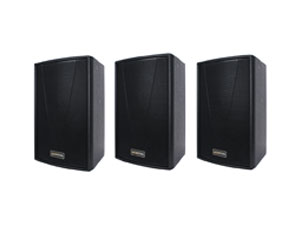
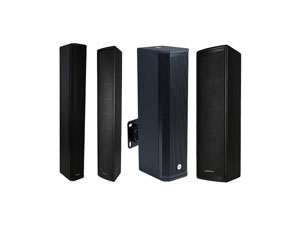
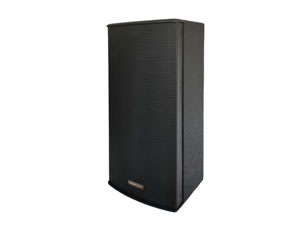
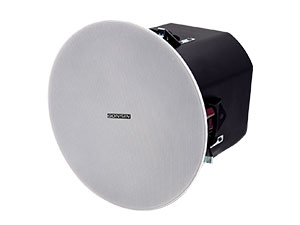
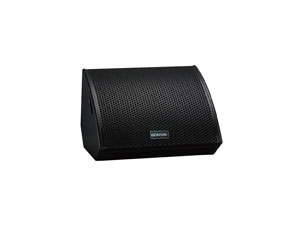
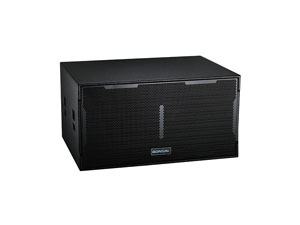
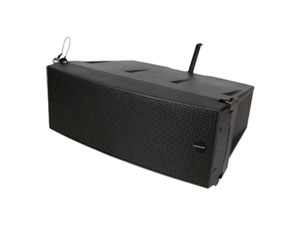
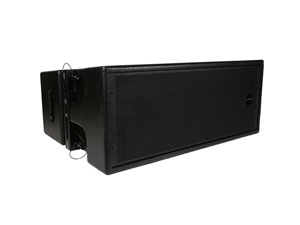
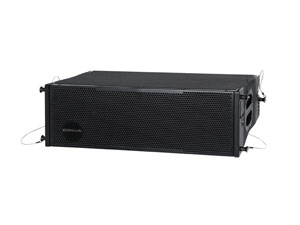
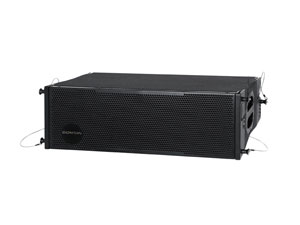
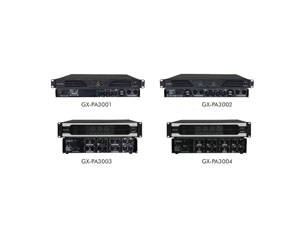
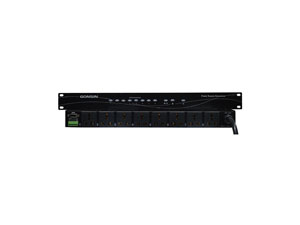
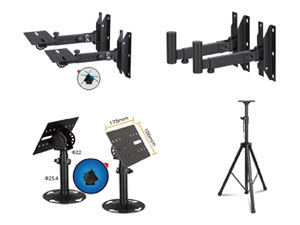
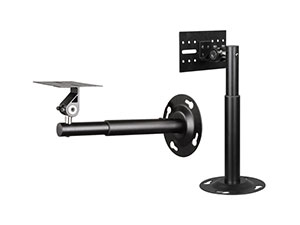
GONSIN provides different loudspeaker solutions within its conference public address range, allowing system design to be matched to the scale and layout of the venue rather than relying on volume alone. Project teams can review the wider range of GONSIN conference and audio products when planning how the discussion system and sound reinforcement will work together.
How Can Microphone Placement and Audio Processing Improve Clarity?
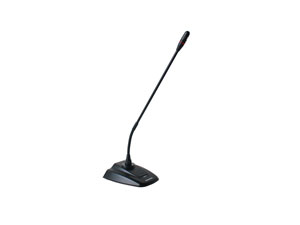
Clear reproduction begins before the signal reaches the loudspeakers. If the microphone captures a weak voice together with a large amount of room sound, later processing has less useful information to work with.
The microphone should therefore allow the speaker to talk at a natural distance while maintaining strong pickup of the voice. Moving too far away changes the balance: less direct speech reaches the microphone and more of the surrounding acoustic environment enters the signal. Raising the gain afterward also raises that unwanted content.
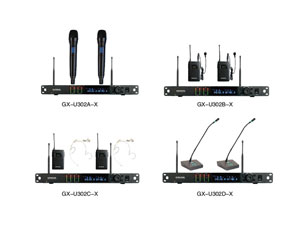
This relationship is especially important in conference settings because several microphones may be available in the same room. Keeping unnecessary microphones open can increase the amount of ambient sound entering the mix and can reduce the margin available before acoustic feedback occurs. A well-managed system should give priority to the microphones that are actually needed at that moment.
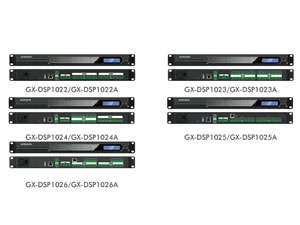
Once the source is captured properly, digital processing can make the system more controlled. Equalization can correct tonal imbalance, delay can help coordinate separated loudspeaker zones, and feedback management can improve stability when conditions become difficult. These tools are most effective when they are correcting manageable system issues rather than being asked to compensate for poor microphone placement or unsuitable loudspeaker coverage.
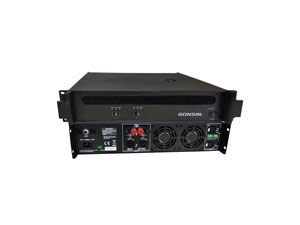
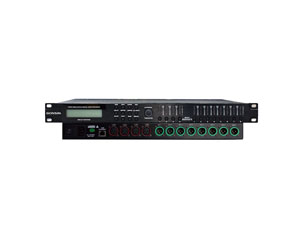
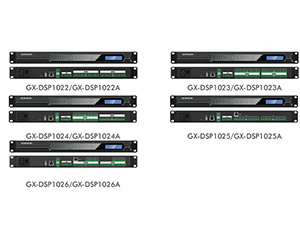
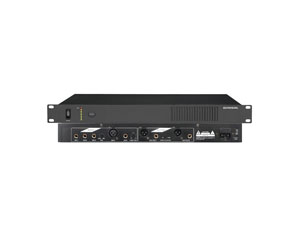
GONSIN's conference PA portfolio includes digital audio processing and dedicated feedback-control solutions designed for professional meeting environments. Their role is best understood as part of the complete signal path: good processing strengthens a sound system that is already acoustically and physically well planned.
How Should a PA System Be Tested for Speech Intelligibility Before Use?
Commissioning should answer a simple question: can people understand speech comfortably from the seats where they will actually listen?
Testing only beside the control desk or directly in front of a loudspeaker gives an incomplete picture. The installer should listen across the occupied area, paying particular attention to seats that are far from the main system, close to reflective boundaries or located where two coverage areas meet.
The test should also resemble normal use. A person speaking naturally into the installed microphone is more informative than checking the room only with music. The system should be evaluated at an operating level appropriate for a real meeting rather than at an unusually high level chosen simply to demonstrate output capability.
Where a project requires objective verification, speech intelligibility can also be assessed using the Speech Transmission Index, or STI. IEC 60268-16 defines the STI model and methods for measuring and predicting speech transmission performance. The appropriate acceptance requirement should be determined by the project specification rather than assumed from a generic value.
If a problem appears during commissioning, the correction should follow the cause. A weak coverage area may require a change in loudspeaker design, while excessive reverberation points back toward the room. Treating every problem with equalization or additional amplifier level can hide the symptom without producing consistently intelligible speech.
For larger conference halls or projects with demanding speech requirements, testing before final handover also gives the integrator an opportunity to refine the system while changes can still be made. Contact GONSIN to discuss a PA and conference audio configuration based on the venue layout and intended meeting use.
Conclusion
Improving speech intelligibility in PA public address systems begins by recognizing that clarity is not created by volume alone. Listeners need a strong direct voice signal that is not overwhelmed by reflections, background noise or inconsistent coverage.
Room acoustics establish the conditions in which the system must operate. Loudspeaker design then determines how evenly the voice reaches the audience, while microphone placement protects the quality of the original signal. Audio processing can refine these elements, but it works best after the physical sound path has been designed correctly.
The final test is not how powerful the system appears on paper. It is whether a listener can sit in a normal seat, hear a natural speaking voice and understand it without effort. That should remain the central design goal of any conference PA system.
Frequently Asked Questions About Speech Intelligibility in PA Systems
1. Does increasing PA system volume always improve speech intelligibility?
No. If poor clarity is caused by reverberation or uneven coverage, increasing volume may make the problem more noticeable rather than solve it.
2. Can DSP fix poor room acoustics?
DSP can improve signal control and system tuning, but it cannot fully remove the effects of strong acoustic reflections in the room.
3. Why are rear seats sometimes harder to hear in a conference hall?
The direct sound may become weaker with distance while reflected sound remains significant. Better loudspeaker coverage can improve this balance.
4. How can speech intelligibility be tested objectively?
The Speech Transmission Index is one recognized method. IEC 60268-16 defines methods for STI measurement and prediction.