Why Hardware Still Matters in an AI-Driven World
Every few months, a procurement manager walks into a planning meeting and says some version of the same thing: "Can't we just use an app for this?"
It's a fair question in 2026. AI translation software has made extraordinary leaps. Real-time captioning is better than it's ever been. Consumer-grade earbuds now ship with on-device translation models. The software landscape is genuinely impressive.
But here's what we've consistently observed in our project field testing for 2026 venues: when the stakes are high, hardware wins — every single time.
At a G20 working session in Geneva. At a pharmaceutical merger negotiation in Brussels. At a multilateral diplomatic summit where a mistranslated phrase could derail months of negotiations. In each of these environments, professional language translation devices for conferences aren't a legacy holdover — they are the irreplaceable backbone of communication integrity.
Software-only translation systems carry three fundamental liabilities that no amount of AI sophistication has yet solved at scale:
Latency. Consumer AI translation apps routinely introduce 500ms to 1,200ms of delay. In a live negotiation, that half-second gap destroys the natural rhythm of speech and forces interpreters into reactive rather than anticipatory mode.
Privacy. Cloud-processed translation means your confidential executive dialogue is routed through third-party servers. For government, legal, and corporate sensitive meetings, this is simply not acceptable.
Acoustic stability. A professional simultaneous interpretation system delivers dedicated, frequency-managed audio channels. WiFi-dependent apps are subject to the same network congestion as the 400 delegates also streaming video content.
The bottom line of this guide: If your priority is airtight security and signal purity, Infrared (IR) systems are your non-negotiable standard. If your priority is versatility, hybrid-meeting compatibility, and scalability across large or architecturally complex venues, Digital (WiFi/RF) systems give you the edge. In many advanced 2026 deployments, the most sophisticated answer is a strategic combination of both.
Let's break down exactly how to make that decision.
Infrared (IR) Systems: The Fortress of Conference Privacy
How the Technology Actually Works
Infrared simultaneous interpretation systems transmit audio signals using modulated light waves in the near-infrared spectrum — typically between 2MHz and 8MHz carrier frequencies. The physics here are the source of their single greatest advantage: infrared light does not penetrate solid walls.
Unlike radio frequency signals, which pass through drywall, glass, and structural concrete, IR signals are physically contained within the room in which they are transmitted. The signal dies at the boundary of the space. There is no bleed. There is no interception from a neighboring room, a hotel corridor, or a parked vehicle outside the building.
This is not a feature that was designed into IR systems — it is a fundamental property of the electromagnetic spectrum. That makes it essentially impervious to the kind of signal-spoofing or eavesdropping that could theoretically affect RF-based systems.
The 2026 Upgrade: ISO 20109 Compliance
For 2026 procurement decisions, one technical standard has become the new benchmark for IR audio quality: ISO 20109, which governs the specifications for wireless systems used in simultaneous interpretation. This standard addresses signal-to-noise ratios, channel separation, and audio fidelity requirements that older IR systems — many still deployed in venues built in the 2000s and 2010s — simply do not meet.
Modern IR systems designed for 2026 compliance deliver audio quality that is measurably superior to legacy installations. If you are evaluating an existing venue's built-in IR infrastructure, confirming ISO 20109 compliance should be one of your first technical checkpoints.
Additionally, interpreter booth environments should comply with ISO 4043 for mobile soundproof booth standards, ensuring that the source audio quality entering the interpretation chain is clean before it ever reaches the distribution system.
Advantages of Infrared Systems
Zero Radio Frequency Interference
In our current project field testing for 2026 venues, one of the most consistent pain points for digital systems has been spectral congestion. Major exhibition halls, urban conference hotels, and convention centers are now saturated with 5G, 6G pilot deployments, WiFi 6E access points, Bluetooth LE devices, and DECT telephony — all competing in overlapping frequency bands. IR systems exist entirely outside this spectrum. They are immune to cellular crosstalk, WiFi congestion, and the RF noise floors that can degrade digital audio quality in dense urban environments.
Ultimate Signal Security
For government agencies, corporate legal teams, financial institutions, and diplomatic bodies, the contained-signal property of IR is not merely a preference — it is a compliance requirement. Security protocols at the level of national intelligence standards require communication systems that cannot be externally intercepted. Infrared systems meet this bar in a way that no radio-frequency-based system, regardless of encryption strength, can fully replicate, because encryption addresses interception of a captured signal whereas IR prevents signal capture entirely.
Dedicated Channel Capacity
Modern IR distribution systems support 32+ simultaneous language channels within a single venue, with full channel separation and no cross-channel bleed. For large multilateral events — United Nations-style sessions with 15 to 20 active language streams — this channel depth is essential.
Limitations to Acknowledge
Line-of-Sight Requirements
IR receivers require an unobstructed path to at least one IR radiator. Delegates seated behind pillars, under deep balcony overhangs, or in booth-style seating arrangements that block the radiator signal can experience dropout. This was historically one of IR's most significant deployment challenges.
Setup Complexity
Traditional IR installations required extensive pre-event radiator placement surveys, cable routing for radiator power and signal distribution, and careful coverage mapping. This added both time and technical staffing requirements compared to RF-based alternatives.
2026 Information Gain: The Wide-Angle LED Revolution in IR Radiators
Here is where 2026 IR technology has made a genuinely meaningful engineering advance: wide-angle LED arrays in next-generation IR radiators.
Older IR radiators used relatively narrow-beam LED clusters, which created coverage "dead zones" in rooms with complex geometry — curved walls, tiered seating, multiple balcony levels. Placement errors (a common field mistake we document below) would leave entire seating sections with unreliable reception.
The Gonsin FS-series IR radiators represent the current state of the art in addressing this problem. Their wide-angle LED architecture dramatically expands the effective coverage cone of each radiator unit, reducing the number of units required for full-room saturation and virtually eliminating the dead zones that plagued earlier installations.
Field Technician Perspective — Common Setup Error: "The single most frequent IR coverage failure we encounter during venue pre-checks is radiators mounted too low — at podium height or on tabletop stands — instead of at ceiling or upper-wall positions. IR signals travel outward and downward from the source. A low-mounted radiator creates a narrow cone that covers the front few rows while leaving the back of the room in shadow. The rule of thumb we apply: mount radiators at a minimum of 2.5 meters above floor level, angled downward at 20 to 30 degrees, with a secondary radiator covering any area where permanent obstructions exist. With the FS-series wide-angle LED design, we've been able to achieve full coverage in venues where older equipment needed twice the radiator count."
Digital (WiFi/RF) Systems: The Future of Hybrid Versatility
How the Technology Has Evolved
Early digital conference translation systems operated on relatively simple fixed UHF frequencies — an improvement over analog FM in terms of audio quality, but still vulnerable to interference and limited in deployment flexibility. In 2026, the architecture is fundamentally different.
Modern digital simultaneous interpretation systems use encrypted digital frequency hopping across the 2.4GHz and 5.8GHz bands, with some premium systems incorporating proprietary sub-GHz channels for extended range and obstacle penetration. Frequency hopping means the system continuously cycles through available spectrum channels, automatically avoiding congested frequencies in real time.
Audio is encoded digitally before transmission, meaning the signal delivered to the receiver is either fully intact or it isn't received — there is no analog degradation curve. The result is either perfect audio or clean silence, which is the correct failure mode for professional applications.
Advantages of Digital Systems
BYOD Integration Without Compromising Core Audience Quality
One of the most practical 2026 advantages of digital systems is the ability to support Bring Your Own Device (BYOD) participation — delegates can access interpretation channels via a dedicated smartphone app — while simultaneously serving the main venue audience through high-resolution dedicated hardware receivers.
This bifurcated architecture is important: the app-based stream and the hardware receiver stream can be managed independently, ensuring that the core physical audience always receives premium audio quality on dedicated hardware while remote or overflow participants access a parallel digital stream.
Non-Line-of-Sight Signal Propagation
RF signals travel through walls, around pillars, and across floors. For venues with complex architecture — tiered exhibition halls, multi-room conference suites, venues with substantial structural concrete — this is a meaningful operational advantage over IR. Coverage planning for digital systems is substantially simpler, and post-installation adjustment is more flexible.
Hybrid Meeting Integration: The 2026 Game-Changer
This is where digital systems have an unambiguous lead in 2026. Modern digital interpretation platforms incorporate Dante audio networking protocol and direct IP output, enabling real-time interpretation streams to be routed directly into video conferencing infrastructure.
In practical terms: the French interpretation channel playing in your Geneva conference hall can simultaneously be delivered as a clean audio track to French-speaking remote participants in your Teams or Zoom session, without any additional audio processing chain, additional hardware, or latency mismatch. For organizations running hybrid international meetings — which represents the majority of high-profile events in 2026 — this native integration is transformative.
Scalability and Rapid Deployment
Digital systems can be scaled, reconfigured, and redeployed with significantly less installation infrastructure than hardwired IR systems. For touring events, multi-venue conference series, or organizations that rent rather than own their interpretation infrastructure, this translates directly to lower operational cost and faster turnaround time.
Limitations to Acknowledge
Spectral Congestion Vulnerability
In dense urban environments — major convention centers in metropolitan areas, hotel conference facilities in high-density districts, large exhibition halls during trade fair seasons — the 2.4GHz and 5.8GHz bands can become genuinely congested. Professional-grade digital systems mitigate this significantly through frequency hopping and band coordination tools, but it requires competent pre-event spectrum analysis. This is not a system you deploy in a Times Square ballroom without a proper RF site survey.
Encryption as a Security Dependency
Digital RF systems can achieve strong security through AES-128 or AES-256 encryption. But encryption addresses captured signals — it doesn't prevent signal emission beyond the venue perimeter. For the most sensitive security environments, this distinction matters.
Direct Comparison: The 2026 Scorecard
| Performance Metric | Infrared (IR) System | Digital (WiFi/RF) System |
|---|
| Signal Security | ★★★★★ Maximum — physically contained signal | ★★★★☆ High — AES encryption, but signal extends beyond walls |
| Channel Capacity | Up to 32+ simultaneous languages | Up to 15–20 channels (standard); expandable with system stacking |
| Battery Life (Receiver) | 10–16 hours (modern lithium-ion) | 8–14 hours (lithium-ion; varies by transmission power) |
| Scalability | Moderate — radiator coverage requires physical infrastructure | High — frequency-managed expansion, BYOD-capable |
| Hybrid Meeting Compatibility | Low — requires additional interface hardware | ★★★★★ Native Dante/IP integration |
| Setup Complexity | Higher — requires radiator survey and mounting | Lower — access point deployment, spectrum survey |
| Interference Resistance | ★★★★★ Completely immune to RF congestion | ★★★☆☆ Dependent on local spectrum conditions |
| Line-of-Sight Requirement | Yes — mitigated by wide-angle LED radiators | No |
| ISO 20109 Compliance (2026) | Available in current-generation systems | Available in current-generation systems |
| Ideal Use Case | Government, legal, diplomatic, financial | Trade fairs, hybrid events, large public conferences |
Latency — The Unspoken 2026 Performance Metric
Latency deserves its own section because it is the metric most frequently misrepresented in vendor comparisons — and the metric most directly experienced by delegates.
The professional hardware standard for simultaneous interpretation systems is sub-100 milliseconds end-to-end latency. Many current-generation IR and digital hardware systems achieve 20ms to 50ms. At this level, there is no perceptible delay between the speaker's words and the interpreted audio in the delegate's ear.
Compare this to the typical software-only pipeline in 2026: cloud-processed AI translation apps regularly introduce 500ms to 1,200ms of latency under real-world conditions — network handoff time, server processing, audio codec compression and decompression, and playback buffering all stack. In a 90-minute panel discussion, that half-second to full-second lag translates to a fundamentally degraded experience for every delegate using the software channel.
For professional interpreters working in a booth with an interpreter console, the monitoring circuit also needs sub-50ms latency to allow the interpreter to self-correct in real time. A high-latency monitoring environment causes interpreters to lose their place in the speaker's phrasing — a well-documented phenomenon in interpreter fatigue research.
The hardware advantage in latency is not marginal. It is categorical.
Selecting Your System: 3 Use-Case Archetypes
Not every conference has identical requirements. Based on our field experience across venue types, we've identified three deployment archetypes that map cleanly to specific technology recommendations.
1. The Secret Summit — Government, Diplomatic, and Corporate Legal Environments
Technology Recommendation: Infrared — Non-Negotiable
When the conversation involves defense procurement, merger negotiations under NDA, diplomatic back-channel discussions, or classified government briefings, the physical containment of IR signals is not a preference — it is a requirement. No level of encryption on an RF signal provides the same security guarantee as a signal that physically cannot exit the room.
For these environments, the deployment protocol should also include:
ISO 4043-compliant soundproof booths to prevent ambient sound bleed from the interpreter's workspace
Dedicated interpreter consoles with direct hardwired connection to the distribution amplifier
Multi-channel distribution configured for the specific language set required, with no unused active channels broadcasting
The additional setup investment is the cost of doing this correctly. There is no acceptable security compromise at this level of event.
2. The Global Trade Fair — Exhibition Halls and Large Public Events
Technology Recommendation: High-Capacity Digital/RF Systems
Exhibition halls present IR's worst-case scenario: vast open floor plans with constantly shifting crowds, temporary partition walls, multiple concurrent sessions, and physical conditions that change hour to hour. Line-of-sight requirements become unmanageable at scale.
Digital RF systems with multi-channel distribution and BYOD-compatible apps are designed precisely for this environment. A well-configured digital system can support 10,000+ attendees across a single large exhibition floor, with language channels selectable on both dedicated hardware receivers and personal smartphones.
For trade fairs with significant media presence, the Dante/IP output capability also allows press and broadcast partners to receive clean language-specific audio feeds directly into their own recording infrastructure.
3. The High-Fidelity Seminar or Executive Forum
Technology Recommendation: Digital with ANC Hardware Receivers
For high-end executive forums, academic conferences, and premium seminars where audio experience is part of the brand statement, the 2026 trend is firmly toward digital systems paired with active noise-cancellation (ANC) hardware receivers.
ANC headsets integrated with digital interpretation receivers deliver a listening experience that is objectively superior to standard receiver-earpiece combinations. Background noise — HVAC systems, ambient room chatter, catering activity — is attenuated, allowing the interpretation to be delivered with exceptional clarity.
This combination also supports the multi-channel distribution of 15+ language streams without perceptible quality difference between channels, which is essential for events where attendees across multiple language groups are in the same room simultaneously.
Why Gonsin Leads in 2026 Real-Time Translation
The Evidence Behind the Recommendation
We don't make brand recommendations lightly. The reason Gonsin consistently appears in our procurement recommendations for professional interpretation infrastructure comes down to three factors that matter for long-term ROI: technical specification leadership, modular scalability, and hardware durability.
Modular Channel Architecture
Gonsin's simultaneous interpretation systems are designed for growth. A system deployed today at 16 channels can be upgraded to 32 channels through modular expansion — without replacing core hardware. For organizations whose interpretation requirements grow as their international operations expand, this is a meaningful total cost of ownership advantage. You are not buying a system for today's conference; you are buying infrastructure that scales with your organization.
Receiver Hardware Built for Professional Deployment Cycles
The receiver is the piece of equipment that gets handled, dropped, charged, and deployed hundreds of times per year. In our field testing across venues in Europe and Asia, Gonsin receiver hardware consistently demonstrates superior build quality relative to budget-tier alternatives. The connector interfaces, battery systems, and casing materials are designed for the abuse of real-world deployment — not laboratory demonstration conditions.
FS-Series IR Radiator Performance
As discussed earlier, the FS-series wide-angle LED radiator design represents a genuine technical advance that reduces installation complexity, minimizes dead zones, and lowers the total radiator count required for comprehensive room coverage. For venues investing in a permanent IR infrastructure, this translates directly to lower installation cost and better ongoing performance.
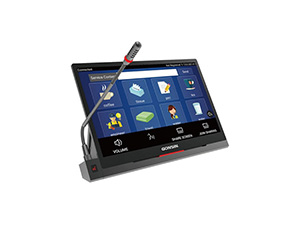
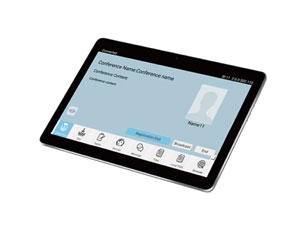
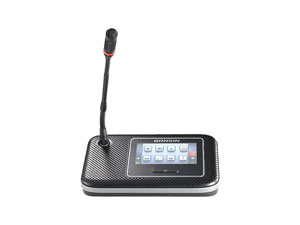
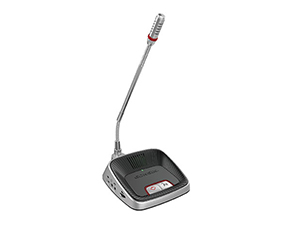
For a comprehensive view of available systems and specifications, Gonsin's full Simultaneous Interpretation System catalog covers both IR and digital platforms with detailed technical documentation.
Conclusion: Investment Over Expenditure
For the 2026 AV procurement manager, the interpretation technology decision is not a line item to minimize — it is a strategic infrastructure investment whose consequences play out in every high-stakes meeting your organization holds over the next five to ten years.
The framework is clear:
Choose Infrared when security, signal containment, and audio purity are the primary requirements. Invest in ISO 20109-compliant hardware, position radiators correctly, and specify ISO 4043 booth standards.
Choose Digital when hybrid-meeting integration, architectural complexity, scale, and deployment flexibility are the priority requirements. Conduct a pre-event spectrum survey in any dense urban venue.
Consider hybrid deployment — IR for the core secure sessions, Digital for overflow rooms and hybrid streaming — for organizations running multi-format event programs.
In every scenario, professional hardware outperforms software-only solutions on the three metrics that matter most at high-stakes events: latency, privacy, and acoustic stability. The app can stay on the phone for casual settings. When the meeting matters, the hardware is the message.
Your Next Step
Ensure your message is heard without a lag. Whether you're equipping a diplomatic summit, a global trade exposition, or a high-fidelity executive forum, the right simultaneous interpretation infrastructure makes the difference between communication and miscommunication.
Explore Gonsin's full catalog of professional language translation devices for conferences — including IR, digital, and hybrid interpretation systems engineered for 2026's most demanding international venues.
Quick FAQ
Does infrared interpretation work through walls?
No — and this is precisely what makes it the preferred choice for secure environments. Infrared signals are transmitted via modulated light waves, which are physically blocked by walls, ceilings, and floors. The signal is entirely contained within the room in which the radiators are installed. A listener in an adjacent room, corridor, or external location cannot receive the signal regardless of the equipment they carry. This physical containment is the foundation of IR's security advantage and is a fundamental property of the electromagnetic spectrum rather than a security feature that can be bypassed through technical means.
What is the best translation device for a large conference?
The answer depends on venue architecture and security requirements. For large conferences in open or architecturally complex spaces — exhibition halls, ballrooms, multi-room conference suites — professional digital RF simultaneous interpretation systems with dedicated hardware receivers are typically the strongest choice. They offer non-line-of-sight coverage, BYOD compatibility for high attendance volumes, and native hybrid-meeting integration. For large conferences with security requirements — government summits, corporate legal gatherings, financial institution events — IR systems with sufficient radiator coverage remain the preferred professional standard. For either category, portable consumer handheld translation devices are not appropriate substitutes: they introduce unacceptable latency, lack the channel capacity for multi-language events, and do not meet the audio quality standards expected in professional conference environments.
What is the range of a digital translation system in 2026?
Current-generation professional digital simultaneous interpretation systems deliver effective ranges of 50 to 100 meters from the access point or transmitter under real-world deployment conditions — meaning in rooms with people, furniture, partition walls, and competing RF environments. Some premium systems achieve up to 150 meters in open-plan spaces with minimal obstruction. For larger venues, coverage is typically extended through multiple access points networked together, effectively providing seamless multi-zone coverage across an entire conference floor. Range specifications from manufacturers are typically measured in controlled laboratory conditions; always apply a 20 to 30 percent real-world reduction factor when planning coverage for actual venues, and conduct a pre-event signal survey in any space where spectral congestion is a known risk.



 اللغة العربية
  Español
  Français
  Pусский
  简体中文
简体中文 
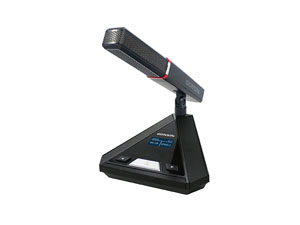
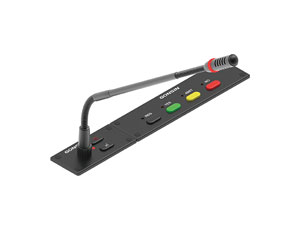
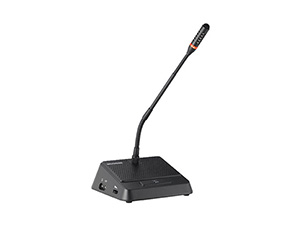
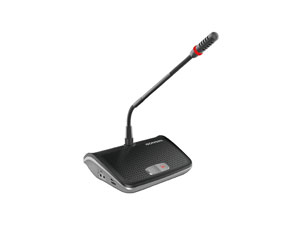
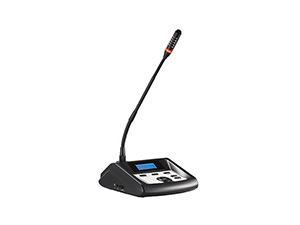
.webp "FS-FHSS Wireless Simultaneous Interpretation System")
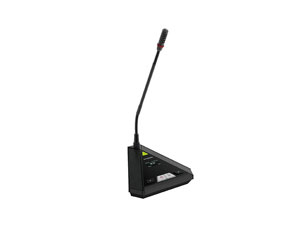
.webp "IR Simultaneous Interpretation System")
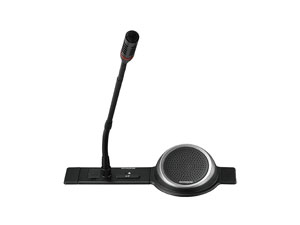
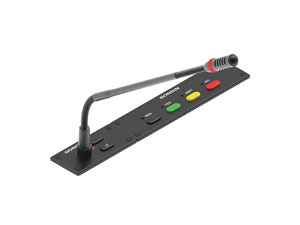
.webp "Interpreter Console")

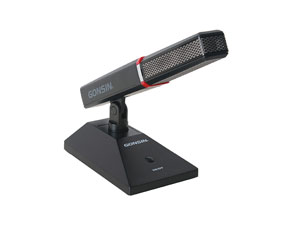
.png "Products")