 اللغة العربية
  Español
  Français
  Pусский
  简体中文
简体中文 
.webp "FS-FHSS Wireless Simultaneous Interpretation System")
.webp "IR Simultaneous Interpretation System")
.webp "Interpreter Console")




This small difference can make an announcement easier to notice. In a hotel lobby, school, office building, or other shared space, people are rarely waiting for a broadcast to begin. A microphone with chime gives them a brief signal that important information is about to follow.
The device itself is simple, but its value depends on how it works with the wider PA system. Understanding the chime, the microphone connection, and the intended announcement environment makes it easier to decide whether this type of microphone is suitable for a project.
How Does a Chime Microphone Work in a Public Address System?
The basic sequence is straightforward. When the operator activates the microphone, the system first sends a short chime to the loudspeakers. Once the cue has played, the operator delivers the announcement through the microphone.
The microphone does not normally provide enough power to drive the loudspeakers directly. Instead, its audio signal enters the PA system, where it is processed and amplified before reaching the required speaker areas. The chime and the spoken message therefore become part of the same broadcast path.
This allows the person making the announcement to follow one simple routine rather than operating a separate tone generator before speaking. For reception desks, service counters, or control rooms where announcements are made regularly, that simplicity can make daily operation more consistent.
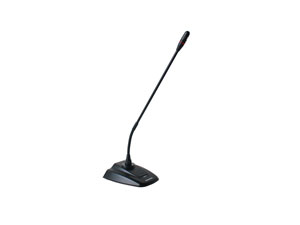
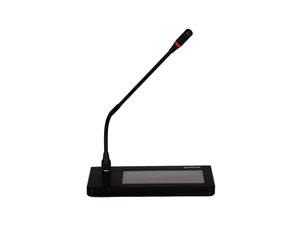
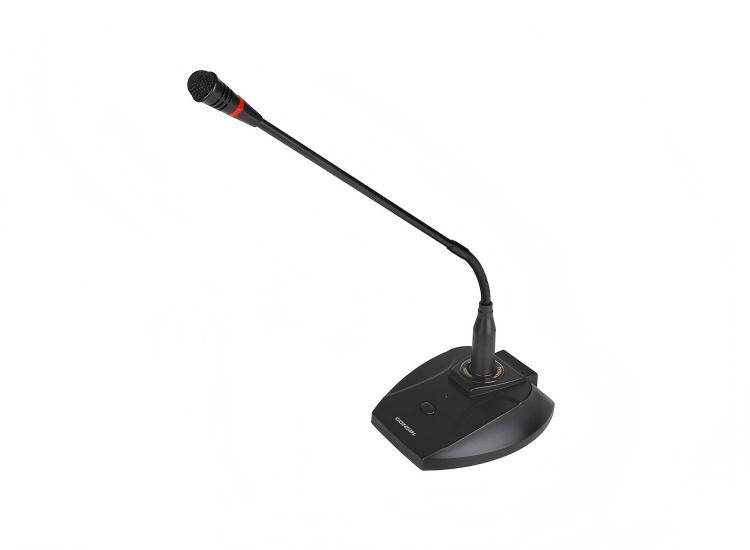
The GONSIN GX-PB1410, for example, is designed to work with a pre-amplifier. When the microphone is switched on, a pre-announcement chime can be played before the operator begins speaking.
Why Is a Chime Played Before a Voice Announcement?
The first words of an announcement are often the easiest to miss. In a public space, listeners may be talking to someone nearby, walking through the building, or concentrating on another activity when the message begins.
A short chime creates a transition between the normal sound environment and the announcement. Instead of speech beginning without warning, listeners receive a recognizable cue and have a moment to redirect their attention.
This is particularly useful when the opening words contain essential context. If an announcement begins with the name of a meeting room, department, or event, missing the start can make the rest of the message difficult to understand.
The chime should remain a cue rather than becoming the main feature of the broadcast. In a quiet environment, an unnecessarily loud prompt can be distracting. A model that allows the chime level to be adjusted can therefore be matched more appropriately to the space.
Over time, a consistent pre-announcement tone can also become familiar to regular occupants. People recognize that the sound means a live message is about to follow, making routine public communication more predictable.
Where Are Chime Microphones Most Commonly Used?
A microphone with chime is most useful where staff need to make live announcements to people who are not already participating in a conversation. This distinguishes it from a conference microphone, where everyone in the room is already focused on an ongoing meeting.
Hotels are a typical example. Staff may need to direct guests to an event room, announce a schedule change, or provide information during a conference. A short chime helps separate that live message from the normal background activity of the venue.
The same principle applies in schools and public buildings. Staff may occasionally need to address a wider area from a reception desk or control point. Because the audience is dispersed rather than gathered around the speaker, an attention signal before the message is useful.
Chime microphones can also be suitable in commercial facilities where background music or normal building activity continues for much of the day. In these spaces, the chime marks a clear change from ambient audio to spoken information.
The important question is therefore not simply what type of building is involved. It is whether the PA system regularly carries live staff announcements that need to attract attention before speech begins.
How Does a Chime Microphone Connect with the PA System?
A chime microphone should be selected as part of the PA signal chain rather than treated as a standalone desktop device. Its output must be compatible with the equipment that receives, amplifies, and distributes the announcement.
In a conventional PA system, the microphone can connect to a pre-amplifier, which prepares the voice signal before it reaches the power amplification stage. The amplified signal is then distributed to the loudspeakers serving the intended area.
This arrangement becomes more important when the same PA system also carries other audio. A hotel, for example, may normally play background music but still need staff announcements to be heard clearly when required. The system should allow the live microphone signal to enter the audio path in a controlled way rather than competing with the existing program sound.
The physical position of the microphone also affects the result. The operator should be close enough for clear voice pickup without having to lean toward the microphone each time. Good placement helps reduce unnecessary room noise and makes announcements more consistent between different staff members.
GONSIN offers public address equipment that can be planned around this complete signal path. Project designers can explore the available GONSIN audio and conference products when matching a paging microphone with the wider PA system.
What Should You Consider When Choosing a Chime Microphone?
The first consideration should be the actual announcement environment. A microphone used occasionally at a quiet reception desk does not face the same conditions as one used regularly in a busy public area. The amount of surrounding noise and the normal speaking distance both influence how the microphone should perform.
Voice pickup deserves particular attention. A directional microphone can help focus on the operator while reducing some unwanted sound from the surrounding area. It still needs to be installed in a position that allows staff to speak naturally.
The chime should also suit the space. A clear prompt is useful, but it should not be so prominent that frequent announcements become disruptive. Where the product allows adjustment, the chime can be set according to the normal listening environment.
Compatibility with the existing PA equipment is equally important. Before purchasing, installers should confirm how the microphone connects to the pre-amplifier and how the announcement will be distributed through the system. This is more useful than evaluating the microphone only by its individual specifications.
Finally, consider everyday operation. The person using the microphone should be able to activate it, confirm that it is working, and begin the announcement without unnecessary steps. A straightforward workflow is especially valuable when several staff members share the same paging position.
The GONSIN GX-PB1410 microphone with chime is designed for PA applications where a pre-announcement tone and live voice input are required. For a new installation or an upgrade to an existing public address system, contact GONSIN to discuss the microphone and system configuration for your project.
Conclusion
A chime microphone performs a simple but useful role in a public address system. By introducing the announcement with a short attention signal, it gives listeners a clearer transition from the surrounding environment to the spoken message.
Its performance still depends on the complete PA system. Clear voice pickup, appropriate chime level, correct connection to the audio equipment, and practical microphone placement all contribute to an effective announcement.
For facilities that rely on regular live paging, choosing the right microphone with chime can make announcements easier to notice and simpler for staff to deliver.
Frequently Asked Questions About Microphones with Chime
1. What is a microphone with chime?
It is a PA microphone that plays a short attention tone before a live voice announcement begins.
2. Why is a chime useful in a public address system?
It alerts listeners before speech starts, helping reduce the chance that the opening words of an announcement are missed.
3. Can a chime microphone connect directly to loudspeakers?
Normally, it works through PA equipment such as a pre-amplifier and amplifier before the signal reaches the loudspeakers.
4. Is a chime microphone suitable for conference discussions?
It is mainly intended for one-to-many public announcements. Conference discussion microphones are better suited to meetings where multiple participants need controlled speaking access.