1) Introduction: The Death of the “Copper Headache”
If you’ve ever upgraded a commercial PA system the “classic way,” you know the hidden cost isn’t the speakers—it’s the copper headache:
Long speaker runs that turn into a routing puzzle
Signal loss over distance, hum/noise pickup, and grounding issues
Rack amplifiers, zoning hardware, and the inevitable “where’s that fault?” troubleshooting loop
In 2026, smart buildings are pushing AV toward the same outcome IT already reached years ago: one network, software-defined control, and fewer single-purpose boxes. That’s why modern integrators are increasingly standardizing on IP-based PA systems—and why a single Cat6 cable (data + power) has become the new baseline for many ceiling deployments.
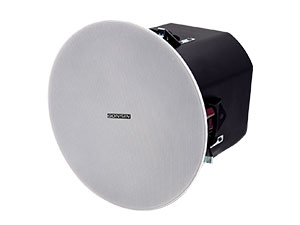
For global AV integrators and project buyers, this shift also changes sourcing strategy. Instead of buying “just another analog speaker,” many teams now look for a ceiling speaker from China that’s designed around IP audio realities: PoE power budgets, network topology, remote management, and firmware-led feature growth. This is where R&D-focused manufacturers—such as Gonsin—differentiate themselves by aligning product roadmaps with digital building infrastructure.
2) IP/PoE vs. Analog: A 2026 Comparison Table
| Category | Analog Ceiling Speaker Systems | PoE / IP Ceiling Speaker Systems (2026 Standard) |
|---|
| Installation Cost | Higher labor (home-run wiring, amp racks, zone matching) | Lower labor (Cat6, structured cabling, faster commissioning) |
| Scalability | Constrained by amplifier channels/zones | Expand by adding endpoints and switch capacity |
| Control & Monitoring | Physical/manual (attenuators, amp zones) | Software-defined (remote control, logs, device status) |
| Audio Quality Over Distance | Can degrade with long runs / impedance losses | Digital delivery avoids analog line degradation |
| Change Management | Rewiring and re-zoning effort | Re-route in software; easier “moves/adds/changes” |
| Troubleshooting | Often multi-step (cable, amp, zone, transformer taps) | Network-centric (device discovery, dashboards, diagnostics) |
3) Why 2026 is the “Tipping Point” for PoE Technology
PoE++ (IEEE 802.3bt) is now mature—and practical
PoE moved from “nice for phones” to “serious power for endpoints” with IEEE 802.3bt (often called PoE++)—standardizing power delivery over all four pairs and increasing available device power. This matters for ceiling audio because higher power budgets can support louder output, better headroom, and more capable onboard DSP without separate power supplies.
IP speakers unlock automation analog can’t
Once a speaker is a network endpoint, it can support capabilities that are either extremely costly—or impossible—in analog:
Automated room/zone tuning (DSP presets applied consistently per space type)
Health monitoring (device online status, fault alerts, event logs)
Central policy control (volume limits, schedules, emergency overrides)
In other words: analog is hardware-defined; IP is software-defined.
Sustainability and material efficiency are now procurement criteria
Fewer copper-heavy runs, fewer dedicated amp racks, and more shared infrastructure (existing network cabinets/switches) supports both lower raw material demand and cleaner retrofit work. For many projects, that translates into simpler compliance narratives and easier cross-team alignment with facilities/IT.
4) The Strategic Advantage: Sourcing a Ceiling Speaker from China in 2026
Targeting the best ceiling speaker from China in 2026 isn’t about chasing the lowest unit cost—it’s about sourcing the most integration-ready endpoint for IP buildings.
Beyond “cheap”: China as an IP-audio R&D engine
Many Chinese manufacturers now build for global integrators who demand:
Network-first product design (PoE power classes, switch interoperability)
Modern protocol support (multicast, QoS, VLAN-friendly deployments)
Firmware-driven lifecycle improvements (security patches, feature updates)
That R&D reality is why China has become a serious sourcing destination for PoE ceiling speaker deployments, not just commodity analog.
Quality standards: what “good” looks like in B2B sourcing
When evaluating a ceiling speaker from China for commercial projects, look for:
Regulatory fit: CE / FCC documentation aligned to your market needs
Network and protocol clarity: declared latency behavior, multicast handling, and management tools
Manufacturer engineering depth: datasheets that specify PoE class/power draw, SPL targets, frequency response, and deployment constraints
If your project involves interoperability with broader AV-over-IP ecosystems, vocabulary matters. Decision-makers increasingly ask about Dante, AES67, clocking/transport expectations, and whether the system is “open enough” for mixed-vendor environments. (AES67, for example, is an interoperability standard for audio-over-IP widely referenced across the industry.)
Supply chain agility: integration speed is the new differentiator
For integrators, the real cost is often time-to-delivery and time-to-commissioning—not just BOM price. The strongest manufacturers tend to offer:
Faster iteration on firmware/features
Better documentation for IT departments
More PoE/IP-specific SKUs (not “analog products with an IP adapter”)
5) Installation Case Study: The “Gonsin” Experience (Expertise & Trust)
Scenario: A multi-floor corporate office retrofit (conference rooms, open-plan zones, lobby, and corridors).
Constraint: The building remains operational; night work is limited.
Problem (Analog Approach)
A traditional analog upgrade would typically require:
New speaker cable pulls per zone (often across floors)
Amp rack expansion and zoning hardware changes
Time-consuming fault isolation during commissioning
Estimated timeline: ~3 weeks due to routing, ceiling access limits, and commissioning complexity.
Solution (IP / PoE Approach with Gonsin)
The integrator specifies Gonsin Digital Public Address IP ceiling speakers powered via PoE, using existing structured cabling pathways where possible:
Cat6 runs terminate at network switches
Speakers are discovered/configured via a web interface
Zones are defined in software, not by amp channels
Result (Business Outcomes)
~40% labor cost reduction (fewer specialized cable pulls + faster commissioning)
Per-zone control without physically re-zoning amplifiers
A foundation for future expansion (add endpoints without redesigning amp topology)
(Note: This is a representative deployment scenario intended to reflect common integrator outcomes when moving from analog to PoE/IP in multi-zone buildings.)
6) Technical Checklist: What to Ask Your China Manufacturer
Use these questions to qualify a PoE/IP-ready ceiling speaker supplier—before you request samples or a quote:
PoE Support
Network & Voice System Compatibility
Latency and Sync
Deployment Requirements
Do you provide guidance for QoS, multicast, and recommended network topology (star, hierarchical, etc.)?
Manageability
Interoperability (when required)
Pro‑Tip (Information Gain)
Pro‑Tip: When installing IP speakers at scale, require VLAN-capable switches and isolate audio traffic from general data traffic. This reduces broadcast noise, simplifies QoS policy, and makes troubleshooting far faster during commissioning.
7) Conclusion: Future‑Proofing Your Investment
In 2026, analog ceiling speakers aren’t “wrong”—they’re simply legacy infrastructure with compounding operational cost. IP/PoE ceiling speakers are increasingly treated as network assets: manageable, scalable, monitorable, and easier to evolve.
If your next project prioritizes speed of deployment, centralized control, and smart-building readiness, switching to PoE/IP is not a trend—it’s a practical upgrade path.
Ready to modernize your audio infrastructure? Explore Gonsin’s 2026 line of IP ceiling speakers and request a custom quote for your commercial project today.



 اللغة العربية
  Español
  Français
  Pусский
  简体中文
简体中文 
.webp "FS-FHSS Wireless Simultaneous Interpretation System")
.webp "IR Simultaneous Interpretation System")
.webp "Interpreter Console")