Designing a world-class conference space requires an audio infrastructure that ensures absolute speech clarity, unbroken signal transmission, and seamless hardware orchestration. At the core of this infrastructure sits the professional conference discussion system.
For global AV integrators, government procurement specialists, and corporate IT directors, selecting the correct system architecture is critical. The right choice prevents acoustic feedback, eliminates wireless dropping, and complements room aesthetics. Navigating the diverse types of hardware configurations requires analyzing real-world venue demands against advanced technical frameworks. This comprehensive guide breaks down the primary options to help you determine the ideal setup for your commercial facilities.
.jpg "/uploads/image/2026/07/14/10000 Series Seamless Compatible Wired and Wireless Conference System(1).jpg")
1. Seamless Compatible Wired and Wireless Systems: Achieving Hybrid Flexibility
Modern corporate multi-purpose halls and flexible meeting spaces rarely have static, unchangeable floor plans. A venue may host a structured legislative assembly one morning and a dynamic, open-floor panel discussion that afternoon. To accommodate these operational shifts, advanced facilities utilize a hybrid architecture that seamlessly blends both wired and wireless infrastructures into a unified network platform.
Architecturally, a hybrid system deploys a centralized master control server capable of decoding both physical data packets from wired networks and radio frequencies from wireless transceivers simultaneously. This allows the system to manage power distribution, data synchronization, and multi-channel audio routing under a single command interface.
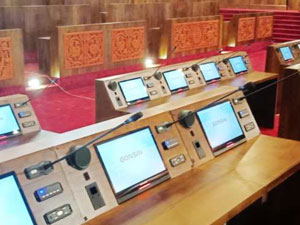
For large-scale facilities, this means core executive seats or podiums can remain securely hardwired via network cables to guarantee maximum uptime, while temporary seating blocks, media galleries, or guest panels can be instantly integrated using wireless portable units. This eliminates complex field cable routing and minimizes configuration time during rapid event turnovers. To achieve this blend of flexibility, systems like the GONSIN 10000N and 10000E Series are engineered to run wired and wireless terminals concurrently without signal separation.
2. FS-FHSS Wireless Congress Systems: Combating RF Interference in High-Density Venues
While wireless audio hardware provides unparalleled spatial mobility and eliminates under-floor wiring constraints, standard wireless networks are highly vulnerable to localized radio frequency (RF) congestion. In massive corporate headquarters, municipal exhibition centers, or hotels where hundreds of smartphones, corporate Wi-Fi routers, and Bluetooth devices actively compete for bandwidth, generic wireless microphones frequently suffer from dropouts, audio artifacts, and static noise.
To safeguard audio transmission in heavily congested environments, professional venues rely on advanced frequency-hopping technologies rather than static wireless channels. By implementing a Selection Frequency-Frequency Hopping Spread Spectrum (FS-FHSS) architecture, the wireless network does not remain fixed on a single frequency band. Instead, the central transceiver and the active discussion microphone array establish an intelligent, continuous scanning loop.
Acoustic Spotlight: FS-FHSS technology actively analyzes the local RF spectrum in real time. The system pre-identifies clean backup frequencies and automatically hops the communication streams away from active interference without dropping a millisecond of live audio.
This protocol provides a highly secure, completely stable signal link across large-scale government assemblies and international summits where wireless operational failure is not an option. GONSIN utilizes this proprietary FS-FHSS technology within its 30000S Series Wireless Congress System to deliver commercial-grade stability in unpredictable RF environments.
3. Dual Chain and Flush-Mounting Backup Systems: Meeting Mission-Critical Redundancy Standards
For high-profile applications like international courts, parliamentary houses, or intergovernmental summits, a momentary loss of audio can derail major legal proceedings or international agreements. These environments demand hardware and link redundancy standards that guarantee zero downtime, ensuring that if a physical component or cable fails, a secondary pathway instantly compensates.
In professional audio engineering, this level of mission-critical reliability is achieved through two distinct localized architectures:
Dual Chain Link Redundancy: This method establishes two independent physical routing paths (loops) for every active terminal in the chain. If an under-floor cable is accidentally severed or a connector loses continuity, the network automatically splits and routes the digital audio through the secondary backup chain instantly from the opposite direction. Systems like the DCS-2043 series utilize this topology to prevent single points of failure.
Flush-Mounted Circuit Redundancy: Designed for fixed furniture layouts, this approach integrates completely independent primary and backup electronic components within a single physical housing. This ensures that even a localized hardware fault inside the terminal will not disrupt the meeting. The DCS-2057 system implements this dual-circuit architecture to combine visual minimalism with data safety.
4. Desktop vs. Flush-Mounting Form Factors: Tailoring Aesthetics to Boardroom Furniture
The physical form factor of a discussion microphone affects both presenter comfort and the room's interior design. Choosing between desktop and flush-mounted housings requires balancing spatial flexibility with architectural minimalism.
| Design Attribute | Desktop Discussion Microphones | Flush-Mounting Discussion Microphones |
|---|
| Mobility & Layout | Placed directly on surfaces; easily repositioned or put away. | Permanently embedded; tailored to specific table slots. |
| Cable Management | Visible daisy-chained surface wiring between bases. | 100% hidden routing underneath the boardroom furniture. |
| Functional Modules | Typically fixed features (speech/headphone jacks). | Highly modular (integrates voting, interpretation, card slots). |
| Visual Footprint | Moderate impact; occupies active desk space. | Zero footprint; matches flush with table contours. |
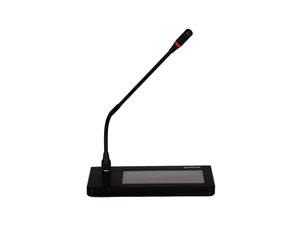
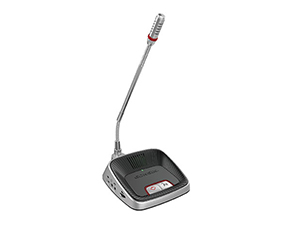
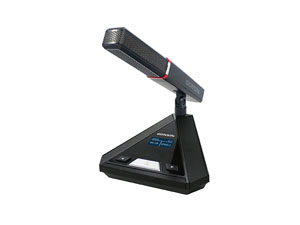
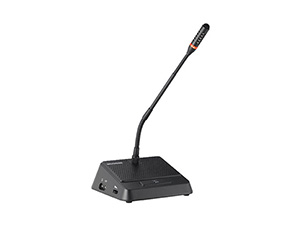
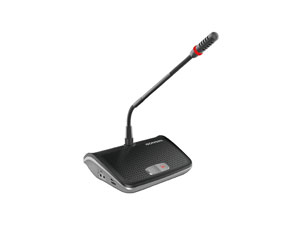
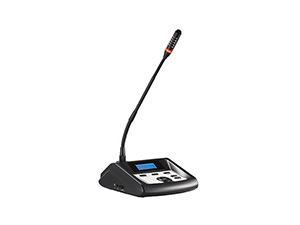
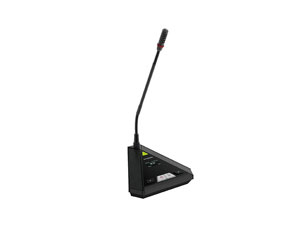
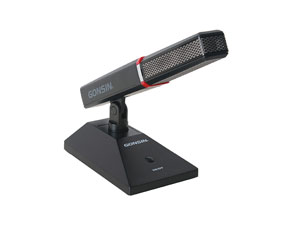
Desktop units are completely self-contained modules placed directly on top of the conference table surface. Represented by hardware designs like the TL-3200, TL-3300, TL-4200, and TL-4300 series, they offer excellent deployment flexibility, allowing facility staff to add, remove, or reposition microphones easily based on the exact number of active participants.
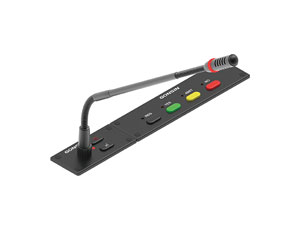
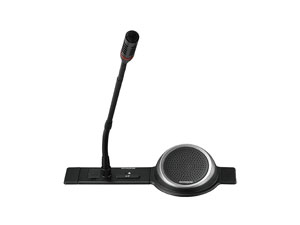
Conversely, flush-mounted units are permanently cut and embedded directly into the conference table structure. This approach, seen in modular designs like the TL-5600 combination series, eliminates all visible surface cabling by routing data lines entirely underneath the furniture. This layout allows multiple functional modules—such as electronic voting keys, physical chip card registration slots, and simultaneous interpretation channel selectors—to be neatly organized in a uniform panel without cluttering the workspace.
5. Rectangular Columnar Short Microphones: The Evolution of Premium Speech Capture
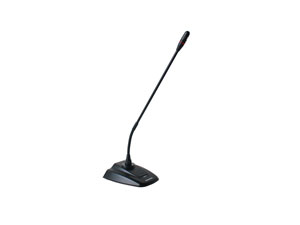
Traditional long-neck gooseneck microphones can create physical and visual barriers on camera. They often block the speaker's face during video conferences or televised press briefings, restrict the movement of delegates, and require speakers to lean uncomfortably close to the microphone capsule to maintain adequate signal levels.
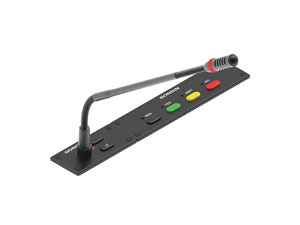
The evolution of speech capture has led to the development of low-profile, rectangular columnar short microphones. Rather than relying on a single microphone capsule at the end of a long stem, these advanced units utilize an integrated vertical acoustic capsule array housed within a compact, geometric structure.
This array topology creates a wide, deep, and forgiving directional pickup field. It gives delegates the freedom to sit back naturally or turn their heads while speaking, without experiencing sudden drops in audio volume or clarity. At the same time, the ultra-low profile maintains an unobstructed line of sight, which is essential for automated PTZ camera tracking networks and broadcast media video feeds. GONSIN's Leaders Series (including models like the MIC-240B) embodies this short-columnar innovation for premium executive spaces.
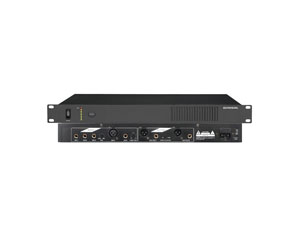
6. Streamlining Your AV Architecture: Linking Advanced Discussion Systems with a Professional China Sound Mixer
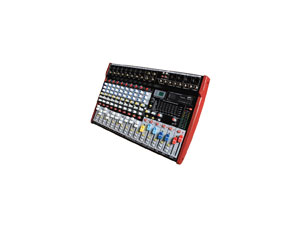
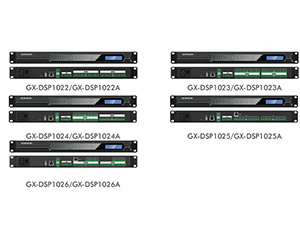
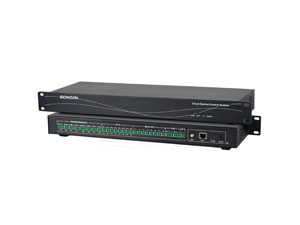
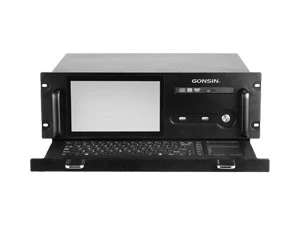
A premium conference network requires a clean path from initial voice capture to final sound reinforcement. To maximize signal clarity and speech intelligibility, the frontend conference microphones must link seamlessly with the venue's core mixing and processing hardware. When a professional conference discussion system links directly with a network-ready China sound mixer, the entire audio pipeline operates as a single intelligent platform. The digital mixer manages the multi-channel matrix buses, applies automated noise gating, and routes isolated audio channels directly into external AI-driven ASR software. This integrated workflow enables zero-latency multilingual transcription and real-time streaming subtitles for high-end international assemblies.
Since 2003, GONSIN has driven this independent engineering innovation across the international audio-visual and congress hardware sectors. Operating under strict ISO 9001:2015 certified production workflows, GONSIN delivers field-tested systems deployed in over 140 countries worldwide. Ready to upgrade your corporate facility with the latest discussion hardware? Explore our complete Conference Discussion System solutions. Please Contact Us today to collaborate directly with our engineering design team for a custom acoustic evaluation and system blueprint.
Conclusion
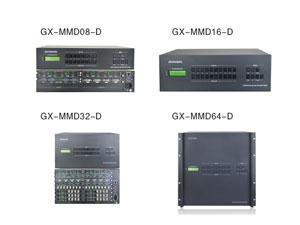
Selecting the right type of conference discussion system requires matching the room's physical layout with its security and stability requirements. Whether your space demands the flexibility of a seamless hybrid wired/wireless system, the interference protection of an FS-FHSS wireless network, or the absolute security of a dual-chain backup architecture, matching your form factors to the venue is essential. Partnering with an all-in-one developer like GONSIN ensures that every discussion microphone, digital matrix switcher, and central processing hub works in perfect harmony to deliver clear, reliable audio.
Frequently Asked Questions (FAQ)
1. What are the main benefits of a hybrid wired/wireless conference discussion system?
A hybrid system allows wired and wireless microphones to operate simultaneously on a single control server. This provides permanent stability for primary executive seats while allowing easy wireless expansion for changing seating layouts.
2. How does FS-FHSS technology protect wireless microphones from dropping signals?
FS-FHSS (Selection Frequency-Frequency Hopping Spread Spectrum) technology continually scans the local radio spectrum for interference. If a frequency becomes congested by Wi-Fi or mobile traffic, the system automatically shifts the audio feed to a clean channel instantly without any sound dropouts.
3. When should I select a flush-mounting discussion microphone over a desktop unit?
Flush-mounting units are ideal for permanent, high-end boardrooms where a clean aesthetic is a priority. They embed directly into the furniture to hide all cabling and can integrate additional modules like electronic voting, simultaneous interpretation, and card registration.
4. Can GONSIN discussion microphones interface directly with automated camera tracking?
Yes. GONSIN conference systems feature native camera tracking protocols. When a participant activates their discussion microphone, the system automatically sends a command to PTZ cameras to instantly frame the active speaker.



 اللغة العربية
  Español
  Français
  Pусский
  简体中文
简体中文 
.webp "FS-FHSS Wireless Simultaneous Interpretation System")
.webp "IR Simultaneous Interpretation System")
.webp "Interpreter Console")